
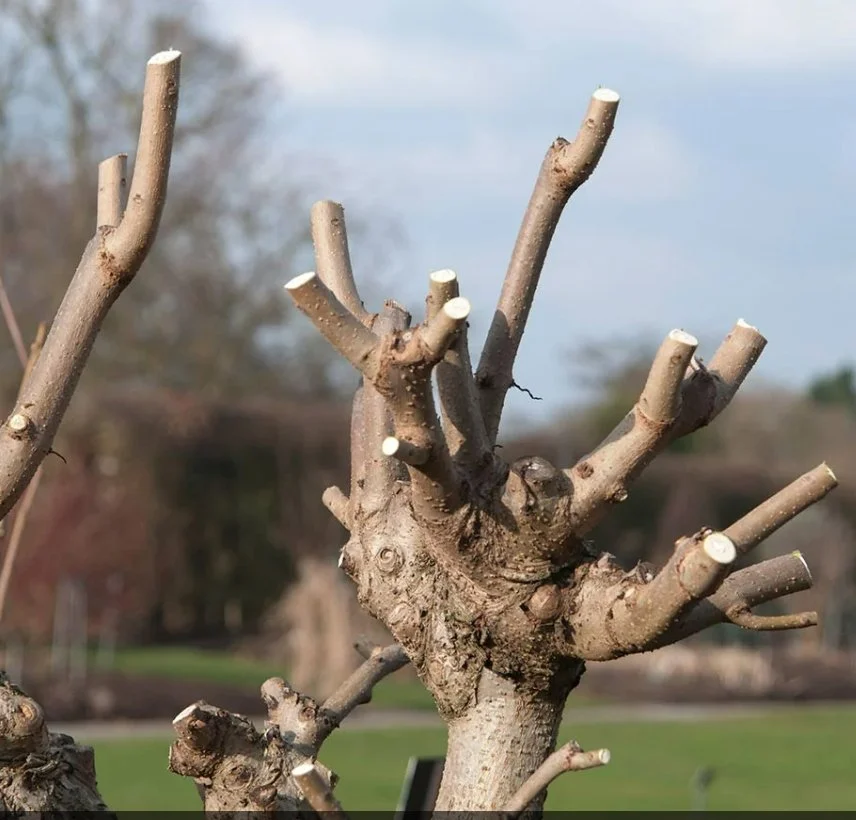
Zero emission pollarding
Professional tree work carried out by fully qualified tree surgeons
We provide professional crown reduction and crown thinning services — powered entirely by zero-emission, low-noise equipment. No fossil fuels, no fumes, no unnecessary noise — just skilled arboriculture that protects your trees and our environment.
Crown Reduction
Crown reduction carefully and selectively reduces the overall size and height of your tree’s canopy, while preserving its natural shape and health. It’s ideal for:
Bringing overgrown trees back to a safe, manageable scale
Reducing wind resistance to limit storm damage risk
Letting more light and space reach your garden or property
Complying with local planning or tree preservation requirements
How It Works
Establishment – When the tree is young, the main stem is cut at a chosen height (usually 2–5 metres, depending on space and species). This triggers the tree to sprout clusters of vigorous new shoots from the cut point.
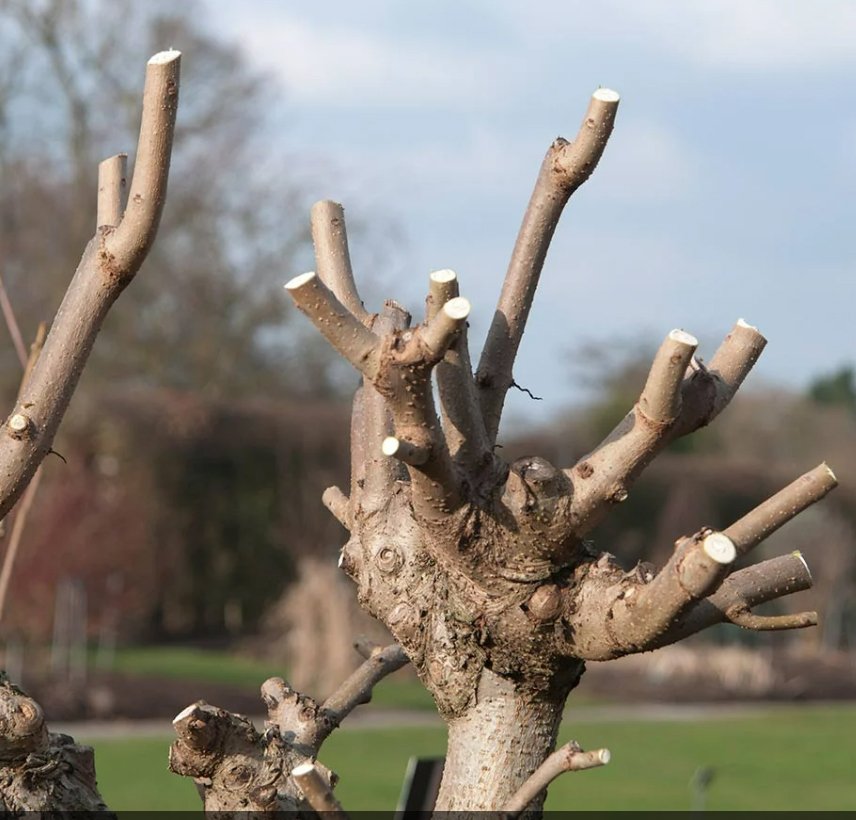
Framework Builds – Over a few years, these shoots thicken and form a distinct, swollen "pollard head" — a dense, sturdy base where future growth will emerge.
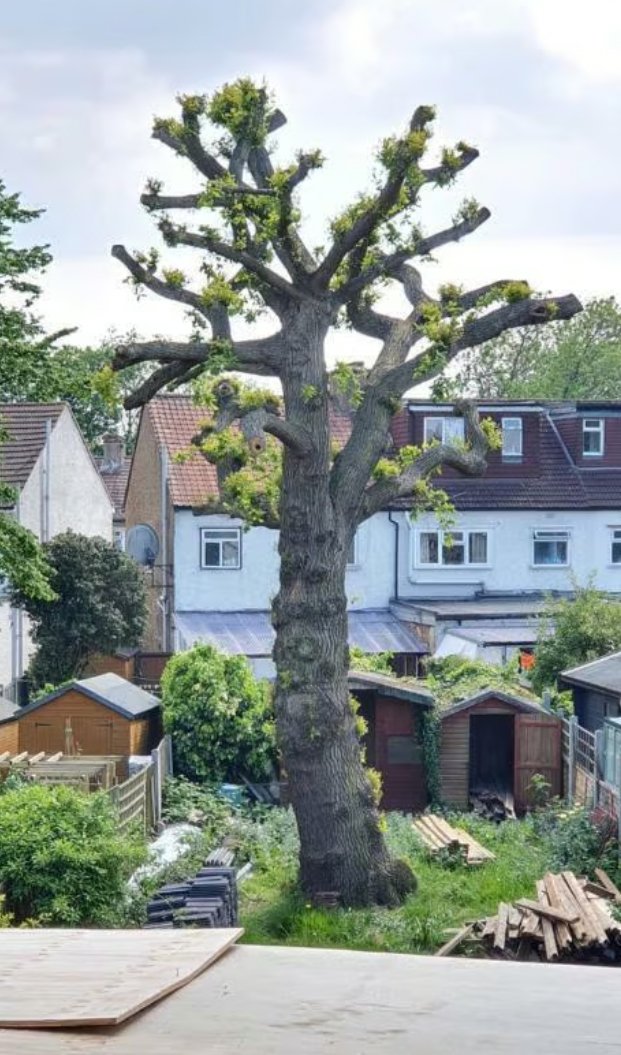
Regular Maintenance – Every 1–5 years (timing matched to species and your goals), all new growth is pruned cleanly back to that same established head. The tree responds by producing fresh, leafy, tightly packed growth.
Long‑Term Cycle – Repeated this way, the tree develops a robust, characteristic shape and can live far longer than an unpruned or poorly pruned specimen — some pollarded trees thrive for hundreds of years.
Key Benefits — For Trees, Spaces & Nature
Extended lifespan – Reduces stress, limits wind resistance, and prevents heavy, dangerous branches from forming; ancient trees are often preserved this way.
Safe, controlled growth – Ideal for streets, gardens, and buildings where space is tight: keeps trees at a manageable height without removing them entirely.
Health & vitality – Encourages fresh, dense foliage; reduces disease risk by removing ageing or damaged wood.
Wildlife value – Young, dense regrowth provides excellent cover and food for birds and insects; mature pollard heads offer nesting hollows.
Cultural & landscape value – A centuries‑old practice that creates distinctive, stately trees; it preserves the traditional character of parks, avenues, and estates.
Which Trees Suit It?
Best for vigorous, hardy species including:
Willows, poplars, limes (lindens), planes, oaks, ash, and certain fruit trees
Generally not recommended for slow‑growing species or trees that cannot tolerate hard cutting — we always assess each tree first
Our Zero‑Emission Approach to Pollarding
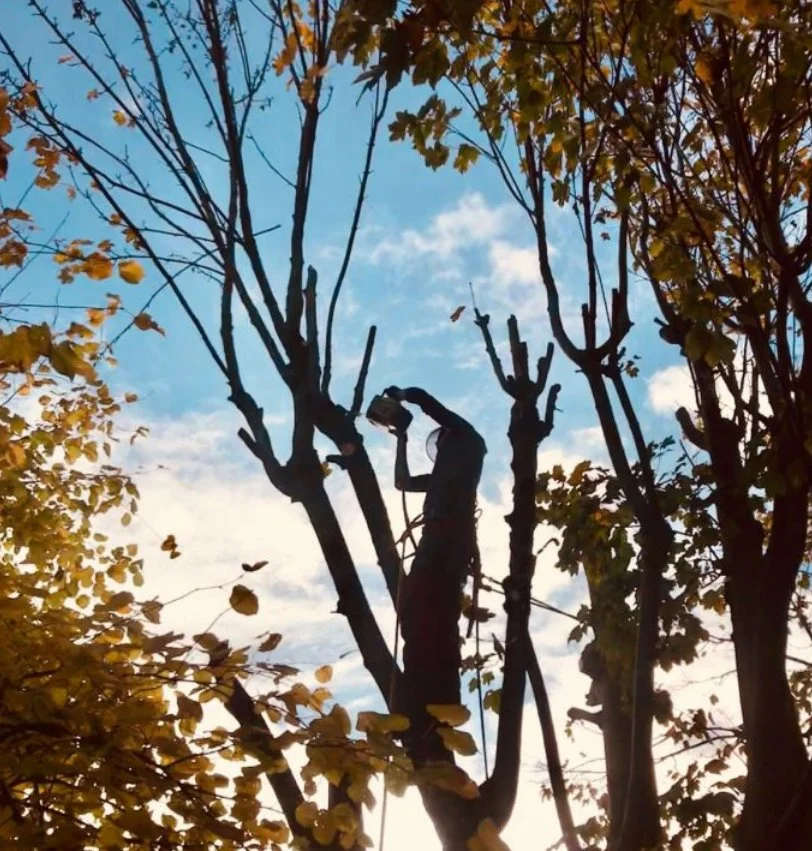
Every cut above is delivered entirely with electric, low‑noise, zero‑emission equipment — so we protect the tree’s future and the planet’s future at the same time. No fumes, no diesel‑powered disturbance, just skilled, quiet, sustainable care.